
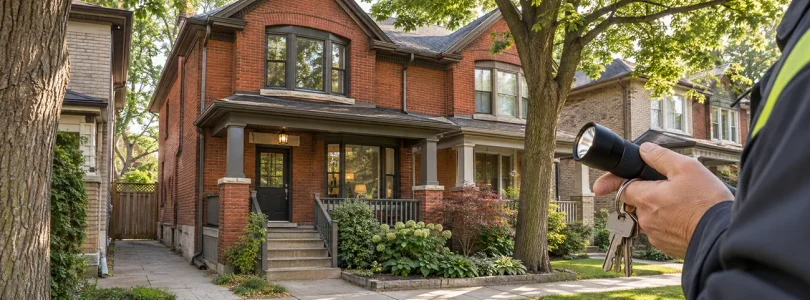
A Toronto property listed under power of sale can look like an opportunity, particularly when its asking price sits below nearby listings. But the price tells only part of the story. The purchase agreement, property condition, financing requirements and possession arrangements can have just as much influence on what you eventually spend.
Buying a power of sale property in Toronto can make sense when you have enough information to assess the risks and enough financial flexibility to manage them. It becomes much harder to justify when the purchase depends on optimistic repair estimates, immediate occupancy or assumptions about what the lender will cover.
Before making an offer, focus on three questions: What exactly are you buying? What obligations are you accepting? And does the property still represent good value after those obligations are included?
What Is a Power of Sale Property?
Power of sale is a mortgage enforcement process that allows a lender to sell a property following a borrower’s default, subject to the mortgage terms and applicable Ontario law. The lender uses the proceeds to recover amounts owing, with the distribution of remaining funds governed by legal priorities.
It differs from foreclosure. In a foreclosure, the lender seeks ownership through a court process. In a power of sale, the lender exercises its authority to sell the property to a buyer. Ontario’s Mortgages Act establishes requirements governing the exercise of that authority.
For buyers, the distinction matters because the seller may have little firsthand knowledge of the home. You are dealing with a lender enforcing a mortgage, rather than an owner who can describe years of repairs, maintenance and everyday use.
Also, “bank sale” is not always an accurate description. The selling mortgagee may be a private lender or another lending institution. Have your lawyer confirm who is selling, their authority to sell and the specific transaction structure.
Are Power of Sale Homes Cheaper?
There is no automatic power of sale discount.
A lender selling under power of sale has a duty to act in good faith and take reasonable care to obtain fair market value. Recovering the mortgage balance does not give the lender unrestricted freedom to accept any price.
A lower asking price may reflect an unfinished renovation, limited inspection access, uncertain possession or substantial deferred maintenance. Those factors can reduce the property’s value to a buyer, even if neighbouring homes have sold for more.
Evaluate the home against recent sold properties with genuinely comparable characteristics:
- Property type, size and layout.
- Location and immediate surroundings.
- Parking and outdoor space.
- Physical condition and required repairs.
- Occupancy and tenancy arrangements.
- For condos, the building’s finances and monthly expenses.
A renovated detached home is a poor benchmark for a property requiring structural investigation and a complete interior rebuild. Similarly, a vacant condo ready for occupancy is not directly comparable to a tenanted unit with unresolved documentation.
Your offer should follow the evidence about the property, not a predetermined percentage below the asking price.
Read the Lender’s Schedule Before Making an Offer
The additional schedule attached to a power of sale agreement deserves close attention. It can modify the protections, representations and obligations found in the standard purchase agreement.
Power of sale terms may address the property’s condition, ownership of appliances, cancellation rights and other matters that affect the buyer’s position. Legal review before signing is particularly valuable because the consequences may extend well beyond the purchase price.
Ask your lawyer to explain the agreement in practical terms:
- What must the seller deliver on closing?
- Which statements about the property can you rely on?
- Can the seller extend the closing date?
- Under what circumstances can the agreement end?
- What happens to your deposit if the seller terminates?
- Are your inspection and financing conditions preserved?
- Does an additional clause override a protection elsewhere in the agreement?
For example, an offer may contain a standard provision about included appliances, while the lender’s schedule limits any assurance that those appliances belong to the seller. The effect depends on the complete agreement and how conflicting provisions are resolved.
Have your lawyer identify unacceptable terms before negotiations are complete. Discovering their meaning after an offer becomes firm leaves you with fewer options.
Understand the Property’s Condition
What “As Is, Where Is” Means
Power of sale properties are commonly offered with limited assurances about their condition. The meaning of “as is, where is” depends on the wording of the agreement; it should never be treated as a substitute for reading the contract.
A lender may also decline to guarantee the condition or ownership of chattels such as appliances. An item visible during a showing may be financed, belong to someone else or be excluded from what the seller promises to deliver.
Build your budget around what has been confirmed. If an appliance’s ownership and inclusion remain uncertain, avoid assigning it meaningful value in your offer calculations.
Make the Inspection Match the Property
Arrange an inspection where access and the agreement allow it, and use the findings to decide whether specialist assessments are needed.
Start with the systems that could materially change the purchase decision: structure, roof, drainage, electrical, plumbing, heating and signs of water damage. Cosmetic improvements can usually wait; an unresolved structural concern requires a different level of investigation.
Ask the inspector to distinguish between:
- Components inspected and operating normally.
- Defects observed during the inspection.
- Areas that could not be accessed.
- Systems that could not be tested.
- Issues requiring further assessment.
An inspection report is useful partly because it shows what remains unknown. If the water is shut off, for example, you need to understand the limits of any conclusions about the plumbing.
Price the Unknowns Separately
Keep confirmed repair estimates separate from allowances for uncertain work.
A contractor’s quote to replace damaged flooring does not resolve the cause of moisture underneath it. Likewise, a quote for a new electrical panel may not establish the condition of concealed wiring.
For each significant uncertainty, decide whether to investigate further, adjust your maximum price or stop pursuing the property. A general renovation contingency should not become a reason to overlook a problem whose scale you cannot reasonably estimate.
Confirm Financing and Insurance Early
A mortgage preapproval does not guarantee financing for a particular property. As the Financial Consumer Agency of Canada explains in its guidance on mortgage preapproval, the amount ultimately approved depends on factors including the property’s value and your down payment.
Give your mortgage professional the listing, purchase agreement and relevant information about condition or occupancy. Ask whether the proposed lender requires an appraisal, additional inspections or other documents before issuing final approval.
Consider a hypothetical example: you agree to pay $900,000, but the appraisal supports a lower value. Depending on the lender’s requirements, you may need more cash to complete the purchase. A preapproval based on your income does not eliminate that possibility.
Discuss insurance at the same stage. Explain any vacancy, ongoing construction, damage or intended renovation rather than requesting a quote as though the property were an ordinary occupied home. Confirm that suitable coverage can be arranged for closing and that it satisfies your lender’s requirements.
Before removing a financing condition, understand what remains outstanding. An encouraging conversation with a lender is different from confirmation that the specific property and transaction satisfy its requirements.
Check Who Occupies the Property
Possession deserves its own investigation. Ask who currently occupies the home, under what arrangement, and what the seller is contractually promising on closing.
An empty-looking property is not proof that all occupancy issues have been resolved. Conversely, an occupied property may still suit an investor, provided the tenancy and financial details have been properly reviewed.
If There Are Tenants
Do not assume that purchasing the property ends an existing tenancy.
Ontario has specific requirements for terminating a tenancy for a purchaser’s own use, including eligibility rules, notice and compensation. A notice does not itself guarantee that a tenant will leave by your closing date; an unresolved matter may require the Landlord and Tenant Board process.
Request available leases, rent records, deposit information, notices and details of disputes. Have a lawyer assess the tenancy and the implications for your intended use.
For an investment purchase, calculate income using the actual tenancy information available. Do not assume that ownership changing hands allows an immediate increase to an advertised market rent.
If You Need to Move In
Ask your lawyer to confirm whether vacant possession is an enforceable obligation under your agreement and what happens if the seller cannot deliver it.
Then test your moving plan. Could you manage temporary accommodation? Where would your belongings go? How would a delay affect work, school or the sale of your current home?
If your purchase depends on coordinating another transaction, consider whether to buy or sell first before committing to dates that leave no room for disruption.
Investigate Title, Taxes and Municipal Records
Have Your Lawyer Assess the Title
A power of sale should not be treated as a promise that every registered claim or property issue disappears.
Ask your lawyer to identify the selling mortgage, assess relevant priorities, review the documents supporting the sale and explain which interests will be discharged or remain.
Useful questions include:
- Will an earlier mortgage or other interest remain?
- Are there easements or restrictions affecting your intended use?
- How will property tax arrears and other relevant charges be handled?
- What title insurance coverage is available?
- What exclusions or unresolved matters will remain after closing?
Request clear answers about the risks you would retain. Do not assume that obtaining title insurance resolves every concern with the property.
Check Toronto’s Vacant Home Tax
Vacancy can create an additional issue for Toronto buyers. The City’s Vacant Home Tax guidance states that power of sale is not an exemption and warns that the tax forms a lien on the property for which a purchaser can become responsible.
Ask your lawyer to investigate available occupancy declarations, assessments, outstanding amounts and the agreement’s treatment of these liabilities. If the lender cannot provide the usual occupancy history, establish how that uncertainty affects your exposure before proceeding.
A brief visit to an empty property will not tell you its occupancy history for the relevant taxation period.
Review Permits and Outstanding Orders
Renovation potential should be supported by records and professional assessment.
Toronto’s Property Information Report can provide information about building permits, inspection status and outstanding orders. The City expressly notes that the report does not establish permitted use.
If your budget depends on renting a basement, adding a unit or completing an unfinished addition, investigate that plan separately. Existing rooms, plumbing or a separate entrance are not enough to establish that the proposed use is lawful.
Ask the appropriate professionals to assess both the existing work and the changes you intend to make. The cost of completing a renovation can be very different from the cost of correcting work that was done improperly.
Buying a Power of Sale Condo
With a condominium, you are assessing both the unit and the corporation responsible for the building.
Obtain a current status certificate and supporting documents for legal review. The Condominium Authority of Ontario explains that status certificates contain information about common expenses, unit arrears, reserve funds, special assessments, litigation and the corporation’s governing documents.
Ask how the findings affect your ownership costs and intended use. A low purchase price may be less attractive if substantial building expenses are approaching or restrictions interfere with your plans.
Also confirm exactly what parking and locker interests form part of the purchase. Check the agreement against the title and condominium documents, rather than relying only on the listing description. Our article on buying a condo parking spot in Toronto explains why the ownership structure matters.
For the unit itself, identify who is responsible for repairing any damage. An issue inside the apartment may involve the owner, corporation or insurance arrangements, depending on the circumstances and governing documents.
Could the Sale Be Delayed or Cancelled?
Read the contract before treating the closing date as certain.
Some lender agreements contain provisions allowing the transaction to end if the borrower brings the mortgage back into good standing before closing. Those contractual provisions require careful review.
However, avoid the blanket assumption that every borrower has an unrestricted right to cancel every sale until closing. A binding sale agreement can affect redemption rights; the agreement’s terms and the legal circumstances matter.
Ask your lawyer to explain any termination or extension rights in your transaction, including deposit treatment and whether expenses would be recoverable.
For your own planning, distinguish between refundable commitments and money you could lose. Inspection fees, financing expenses, storage reservations and contractor bookings can matter even where a deposit is returned.
Avoid committing to substantial work or non-refundable arrangements before you understand these provisions and their practical consequences.
Calculate the Full Acquisition Cost
Compare the property’s expected total cost with realistic alternatives available to you.
Your working budget should include:
| Cost category | What to investigate |
|---|---|
| Purchase and financing | Purchase price, down payment and potential appraisal shortfall |
| Closing | Applicable land transfer taxes, legal fees, title insurance and adjustments |
| Investigations | Inspection, specialist assessments, records and document review |
| Immediate repairs | Work needed for safe occupancy and reliable essential systems |
| Planned improvements | Renovations supported by realistic quotes |
| Carrying costs | Mortgage payments, insurance, utilities, property taxes and condo fees |
| Timing uncertainty | Temporary accommodation, storage and delayed rental income |
| Contingency | Funds for issues that remain reasonably uncertain |
Use a realistic scenario and a more demanding one. In the second, increase repair costs, allow extra time and remove income that depends on an unconfirmed assumption.
If the purchase works only when every estimate lands at its lowest possible figure, you have little protection against surprises.
For investors, include the cost of eventually selling or refinancing when assessing the overall plan. For buyers planning to live in the home, consider how much disruption you can realistically accommodate alongside the financial expense.
Power of Sale Buyer Checklist
Use this checklist to organize your investigation with your agent, lawyer, mortgage professional and inspector.
Before Making an Offer
- Confirm the seller’s identity and the nature of the sale.
- Obtain the complete agreement and lender’s schedules.
- Arrange legal review before signing.
- Review comparable sold properties.
- Establish who occupies the property.
- Confirm available inspection access and utility status.
- Discuss the property with your mortgage professional.
- Investigate insurance availability.
- Set a maximum price that leaves funds for repairs and uncertainty.
Before Removing Conditions
- Review the inspection findings and any limitations.
- Obtain specialist assessments or repair quotes where needed.
- Confirm property-specific financing requirements.
- Have your lawyer assess title and relevant sale documentation.
- Investigate property taxes and Toronto Vacant Home Tax exposure.
- Review available permits, orders and intended-use requirements.
- For condos, complete status certificate review.
- Confirm the possession obligations.
- Understand termination, extension and deposit provisions.
- Recalculate your budget using the information obtained.
Before Closing
- Confirm the arrangements for mortgage funding and insurance.
- Review adjustments and the funds required to close.
- Use any contractual right to a final visit.
- Report changes in condition or occupancy promptly to your lawyer.
- Confirm keys, access arrangements and possession logistics.
- Keep funds available for immediate work after closing.
Do not assume that discovering a problem gives you an automatic right to delay closing or withhold funds. Bring it to your lawyer promptly so the response follows your agreement and applicable law.
When Should You Walk Away?
A power of sale property may be unsuitable even when the price appears attractive.
Reconsider the purchase if you cannot inspect a critical area, cannot obtain suitable financing or insurance, or cannot establish an acceptable possession arrangement. The same applies when the expected value depends on an unverified rental unit or a renovation plan that has not been assessed.
Another warning sign is having no money left after closing. A property requiring work needs accessible funds, not just a belief that its future value will be higher.
You do not need to resolve every uncertainty perfectly. You do need to understand which uncertainties remain, what they could cost and whether you can reasonably accept them.
Is a Power of Sale Property Right for You?
The strongest reason to buy is that the particular property fits your needs at a price supported by its condition, documentation and obligations.
For some buyers, that means accepting renovation work in exchange for a suitable location and layout. For others, the additional uncertainty makes a conventional resale a better fit. Compare both options before deciding that a lender’s listing represents the better opportunity.
If you are considering a specific property, contact Armani Group to discuss comparable sales, the buying process and the questions to resolve with your lawyer before making an offer.