
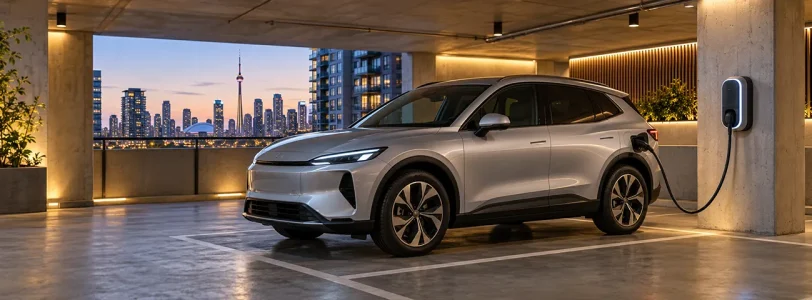
Charging an electric vehicle at home can make everyday driving easier. In a Toronto condo, however, access to charging depends on more than having an underground parking space. The building’s electrical capacity, parking arrangements, approval process and billing system all affect whether you can plug in where you live.
For buyers, “EV charging available” deserves a closer look. It could mean a dedicated charger in your parking space, a few shared stations or infrastructure that still requires additional equipment and approval.
For existing owners, Ontario provides a process for requesting an installation. Understanding that process, along with the building’s technical requirements, can help you plan the work and avoid unexpected costs.
What Does EV Charging Available Actually Mean?
Before comparing properties, establish what each building offers and whether you can use it from the day you move in.
| Charging arrangement | What to confirm |
|---|---|
| A charger in your assigned parking space | Ownership, operating status, compatibility and ongoing fees |
| Shared charging stations | Resident access, booking rules, time limits and availability |
| Infrastructure for a future charger | What has already been installed and what you still need to pay for |
| A proposed charging project | Approval status, funding, installation schedule and eligibility |
An electrical conduit near a parking space is not the same as an energized outlet. An energized outlet is not necessarily a complete charging station. Ask management to describe the actual installation instead of relying on the term “EV-ready.”
When comparing condo buildings across Toronto, evaluate charging alongside parking access, location and monthly ownership costs. A building can suit your lifestyle in many ways while still leaving your charging needs unresolved.
Can You Install an EV Charger in a Toronto Condo?
Yes, an owner can apply to install an electric vehicle charging system. Ontario has specific rules for owner-initiated installations involving condominium common elements.
The application must be written and signed, identify the owner and their address for service, and include relevant drawings, specifications and installation information. The corporation must help provide the information or access reasonably needed to prepare the application.
The corporation generally has 60 days to respond to a compliant application, unless the parties agree in writing to another period. Rejection must be supported by a qualified professional’s opinion or report identifying a prescribed concern, such as a legislative violation, a serious structural or property-damage risk, or a serious health and safety risk. The corporation must provide that opinion or report to the owner.
This process does not mean an owner can begin work immediately. The installation details, cost responsibilities and required agreement still need to be settled.
Does Owning the Parking Space Change the Process?
Owning a parking space does not necessarily give you control over the electrical infrastructure serving it.
A charger installation may require wiring through common areas, access to electrical rooms or changes to shared equipment. Before arranging work, ask management and your lawyer to confirm whether the space is separately titled, an exclusive-use common element or occupied under another arrangement.
That distinction also matters when buying a condo. Confirm that the parking rights and charging arrangements apply to the specific space included in the purchase.
How the Installation Process Works
The practical starting point is a conversation with property management, followed by an assessment of the proposed installation.
1. Request the Building’s Charging Policy
Ask whether the corporation already has a charging system, technical standards or an application package.
Useful questions include:
- Is charging available at individual spaces or only at shared stations?
- Has the building completed an electrical capacity assessment?
- Does the proposed charger need to connect to an existing management or billing platform?
- What drawings and contractor information are required?
- Are there planned electrical upgrades that could affect the installation?
An existing system may simplify the work, but it may also determine which equipment is compatible.
2. Assess Electrical Capacity and Cable Routing
A qualified electrical professional should assess the available supply, proposed equipment and route between the electrical distribution point and your parking space.
The Electrical Safety Authority recommends planning around the building’s overall electrical demand and future charging needs. An energy management system can distribute available power among multiple vehicles, potentially reducing the need for a larger service upgrade. Its suitability depends on the building assessment.
Load management also affects the user experience. Ask what charging performance to expect when several vehicles are plugged in, rather than relying only on the charger’s advertised maximum output.
3. Submit the Application and Complete the Agreement
Once the proposal is accepted, the owner and corporation generally have 90 days to enter into a written agreement, unless they agree to a different period.
The agreement establishes installation and ongoing responsibilities, including costs, maintenance, repair and insurance. It must be registered on title to the owner’s unit before taking effect. For an owner-initiated installation, the owner generally pays the installation costs unless the agreement provides otherwise.
Have your lawyer explain the obligations you are taking on, including what happens when you sell the unit or replace the equipment.
4. Complete the Electrical Work
Use a Licensed Electrical Contractor and confirm that the required ESA notification and review process are included in the scope of work.
An electrical notification is separate from a building permit. ESA’s inspection requirements depend on the project, and some installations require review at multiple stages. Keep the final electrical documentation with the installation agreement and equipment records.
How Much Does Condo EV Charger Installation Cost?
There is no single installation price that applies across Toronto condos. The charger itself is only one part of the project.
Two owners purchasing identical equipment could receive very different quotes because their parking spaces have different cable routes or their buildings have different electrical requirements.
Ask for an itemized quote covering:
| Cost component | What to clarify |
|---|---|
| Charging equipment | Compatibility with the vehicle and building system |
| Wiring and conduit | Route, distance and work through common areas |
| Electrical infrastructure | Required panels, distribution equipment or service upgrades |
| Load management | Equipment, configuration and software charges |
| Professional services | Assessment, drawings and any engineering work |
| Electrical compliance | Notification, review and completion documentation |
| Legal work | Agreement preparation and registration |
| Ongoing service | Network access, billing administration and maintenance |
Compare quotes for the same scope. A lower price may exclude legal costs, infrastructure work or recurring platform fees.
Avoid treating a detached-home installation quote as a reliable condo budget. Shared electrical systems and work through common elements can introduce additional requirements.
Who Pays for Electricity and Ongoing Costs?
Installation costs and charging costs are separate questions.
Depending on the building’s arrangement, charging may involve metered electricity charges, session fees, monthly access fees or a combination of charges. Ask for the current fee schedule and an explanation of how usage is measured.
Before committing, establish:
- Whether electricity is billed separately from regular condo fees.
- Whether there is a monthly fee even when you do not charge.
- Whether shared stations impose idle or overstaying fees.
- Who pays for charger repairs and replacement.
- Whether account setup or transfer fees apply when ownership changes.
Do not assume that electricity included in your condo fees also includes vehicle charging. Request written confirmation of the applicable arrangement.
Do New Toronto Condos Have to Provide EV Charging?
Toronto’s zoning bylaw includes requirements for energized outlets capable of Level 2 charging or higher at residential parking spaces, subject to the applicable provisions and exemptions.
However, it also exempts lawfully existing buildings that were not required to provide those outlets. Buyers should not interpret current requirements as a guarantee that every existing condo parking space has charging infrastructure.
For a pre-construction purchase, have your lawyer review the agreement and disclosure documents to establish what the developer is actually providing.
Ask whether the purchase includes wiring, an energized outlet, charging equipment or access to a shared system. Also confirm any activation costs and whether the promised infrastructure serves your particular space.
What Buyers Should Check Before Making an Offer
If home charging is essential, verify it before committing to the property.
Confirm Access to the Specific Charger
Ask management to confirm which charger or charging space you can use. Find out whether access is immediate, subject to registration or dependent on a waiting list.
For shared stations, ask how many vehicles use them, how reservations work and whether you must move your car when charging ends.
Review the Documents
Have your lawyer review the status certificate package and any separate charging agreement. Status certificates contain information about the unit, the corporation, governing documents and finances, but additional charging records may be needed to answer your specific questions.
Request confirmation of equipment ownership, ongoing obligations and any proposed charging project that could create additional costs.
Check What Happens at Closing
A physical charger in a parking space does not resolve every transfer question.
Confirm whether the equipment is included in the sale, whether a service account needs to be transferred and whether management requires new registration. Ask your lawyer how any registered installation agreement affects you as the purchaser.
Test the Arrangement Against Your Routine
Consider when you normally arrive home, how far you drive and whether shared charging fits your schedule.
A station that is convenient for occasional use may be less practical if you need to charge frequently and cannot leave your parking space during the evening. Evaluate the arrangement based on your actual driving habits.
Does EV Charging Increase a Condo’s Resale Value?
Reliable charging can make a property more useful to buyers who own an electric vehicle or plan to purchase one. However, it is not a sound basis for assuming a fixed resale premium.
Its appeal depends on the complete arrangement: dedicated access, reasonable operating costs, clear documentation and dependable equipment.
For sellers, describe the feature precisely. State whether the charger is included, identify recurring fees and make supporting documents available. A clear explanation is more useful than a broad “EV-ready” claim.
Choosing a Condo That Fits Your Charging Needs
The most useful question is whether you can reliably charge your vehicle, at a known cost, under an arrangement that applies to your parking space.
Before buying, confirm access and documentation. Before installing, establish the technical requirements and full cost. These checks help turn a listing feature into a practical part of everyday condo living.
If you are looking for a Toronto condo with suitable charging access, Armani Group can help you compare properties and identify the questions to resolve before making an offer.